Locating an effective pest control service in Tacoma near me requires addressing the unique biological pressures created by Puget Sound moisture and historic Pacific Northwest architecture. Clearstone Pest Guard executes targeted barrier installations, crawl space cleanouts, and mechanical exclusion without locking homeowners into unnecessary monthly contracts.

A professional pest control service in Tacoma is an exterior barrier and interior exclusion methodology designed to neutralize regional insect colonies, eliminate damp-wood pests, and halt rodent entry across Pierce County structures.
Every service reflects the same meticulous attention to detail, whether it's a single job or a larger pest control service project across Tacoma.
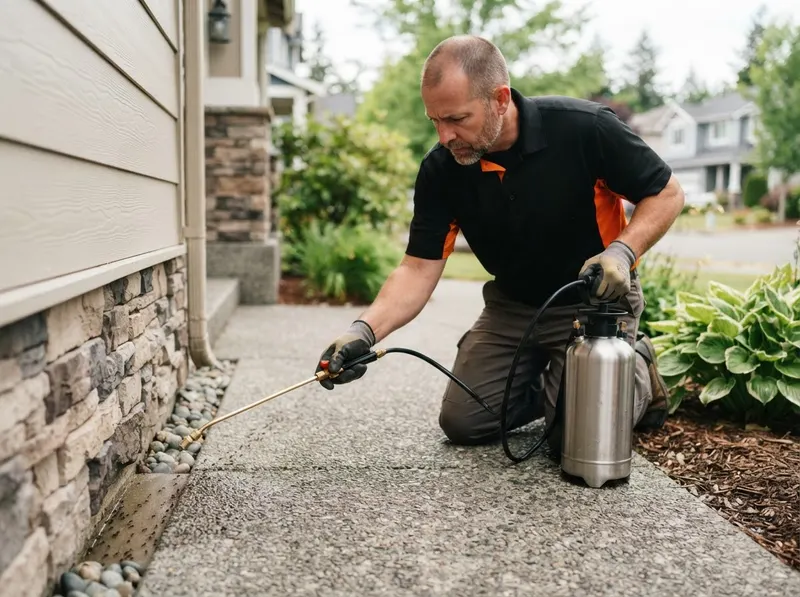
Application of non-repellent perimeter treatments engineered to disrupt odorous house ant (Tapinoma sessile) pheromone trails and dismantle subterranean colonies without causing colony budding. Field technicians treat a band three feet up the exterior foundation and two feet outward onto soil or hard surfaces. The liquid formula transfers systematically between foraging workers and reproductive queens, neutralizing hidden satellite colonies nesting beneath concrete walkways, landscape pavers, and patio slabs throughout Tacoma yards.
Get a quote →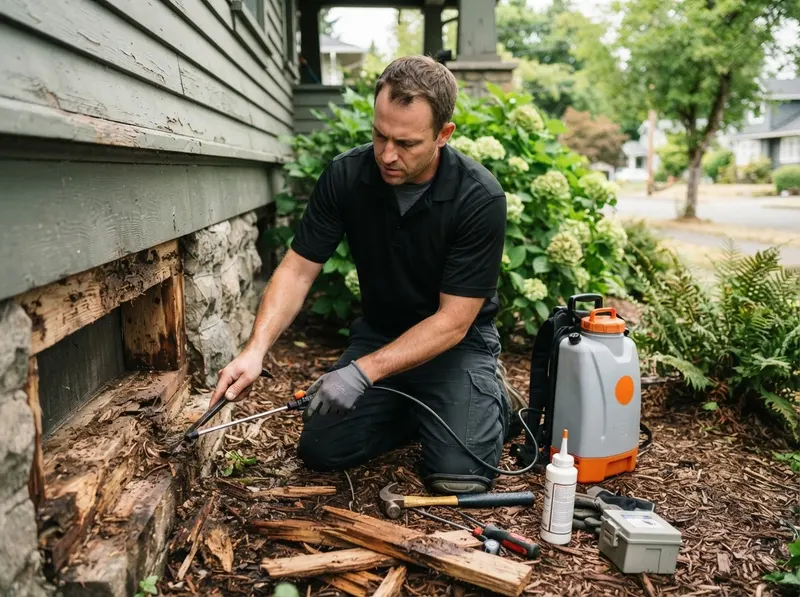
Specialized void injections and perimeter defense targeting wood-destroying Camponotus species nesting inside damp sill plates, floor joists, and moisture-damaged wall cavities. Treatment incorporates aerosolized dry-foam formulations that expand through wall studs and framing without saturating drywall. Acoustic detection equipment isolates active excavation galleries, allowing precision drilling and micro-injection directly into parent or satellite nests rather than relying on broad broadcast sprays across interior baseboards.
Get a quote →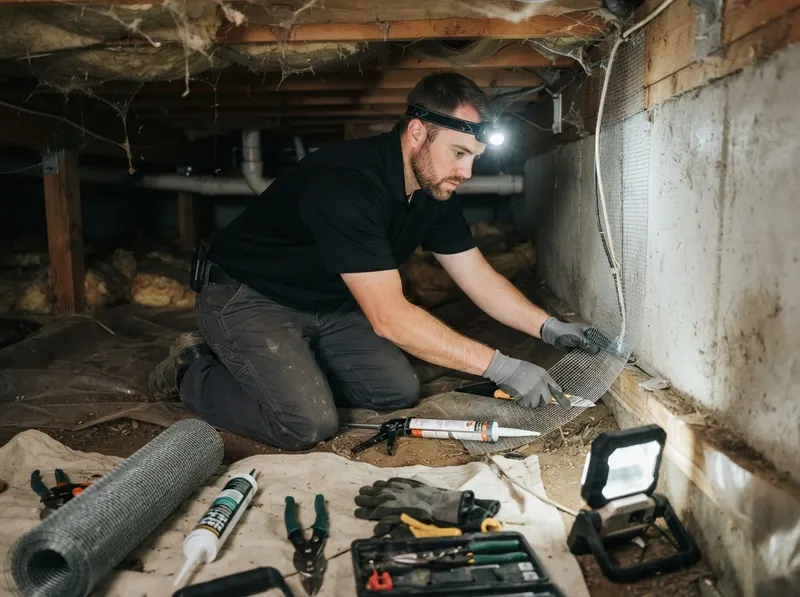
Sealing foundation vents, rim joists, and utility access pathways using quarter-inch 23-gauge galvanized steel mesh to halt Norway rat (Rattus norvegicus) and roof rat intrusions. Technicians inspect the full foundation perimeter, anchoring metal screens over unscreened access portals and packing exterior plumbing penetrations with copper mesh and elastomeric sealant. This physical barrier denies subterranean burrowers and climbing rodents entry into heated crawl space subfloors without reliance on exterior poison bait stations.
Get a quote →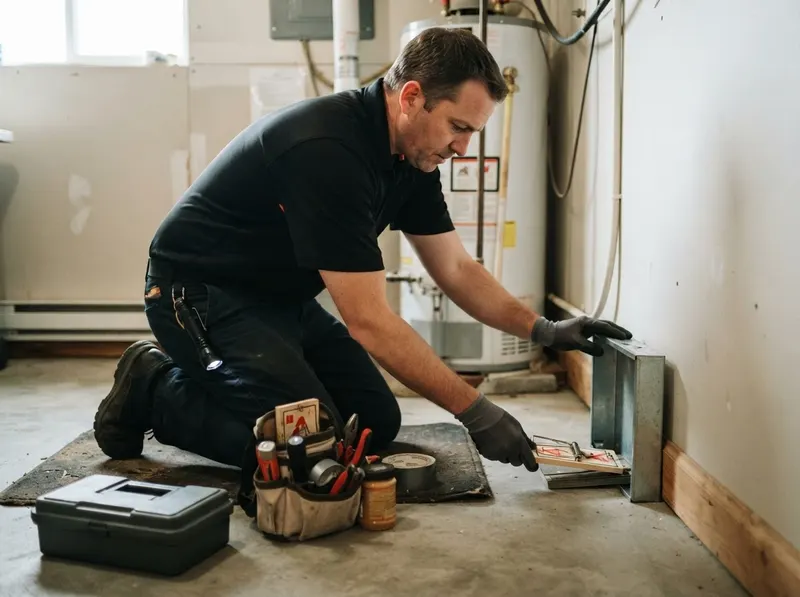
Placement of commercial snap traps and monitoring stations inside crawl spaces, attics, and utility voids to systematically remove existing rodent populations without secondary poison risks. Trapping stations are calibrated to target runway pathways along joists and foundation shelves, mapped using non-toxic tracking powders. Traps are monitored, serviced, and reset across multiple structural inspections, preventing odor issues from decomposing rodents trapped inside unreachable wall voids.
Get a quote →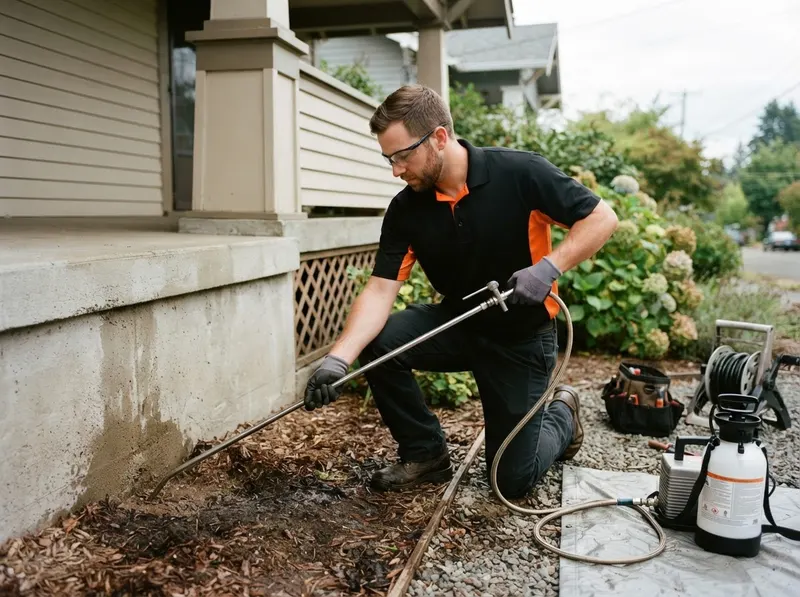
Trenching and targeted termiticide soil barriers placed along foundation footings to intercept Western subterranean termites (Reticulitermes hesperus) traveling from native forest soil. Technicians dig narrow six-inch trenches along stem walls and inject high-affinity liquid barrier agents that bind directly to regional loam and glacial till. This creates an uninterrupted subsurface perimeter that prevents subterranean worker termites from establishing mud foraging tubes across concrete stem walls.
Get a quote →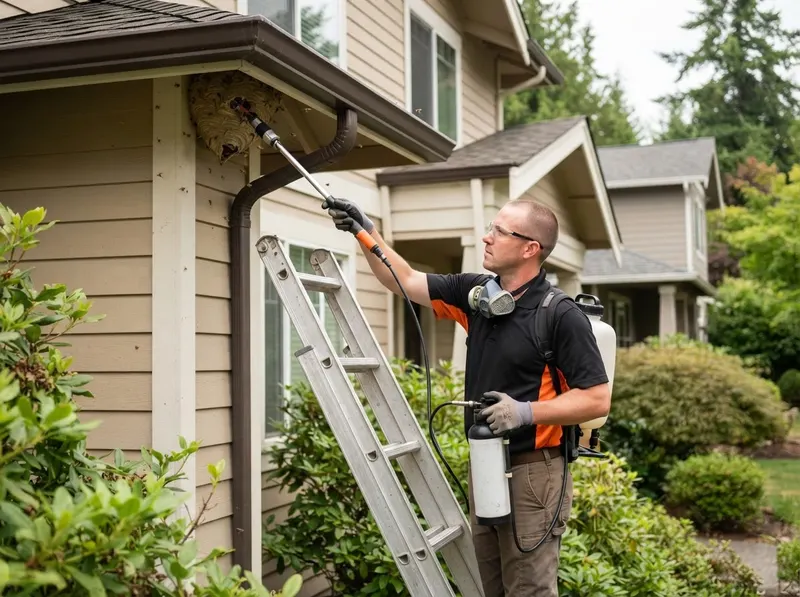
Direct mechanical removal and targeted knockdown of aerial yellowjacket, bald-faced hornet, and paper wasp nests anchored beneath roof eaves, fascia boards, and porch ceilings. Technicians utilize extended application lances delivering localized freezing formulations and residual dusts directly into nest entrances. The physical nest structure is scraped clean from structural surfaces, followed by an enzymatic wash that degrades residual aggregation pheromones to deter reconstruction by wandering queens.
Get a quote →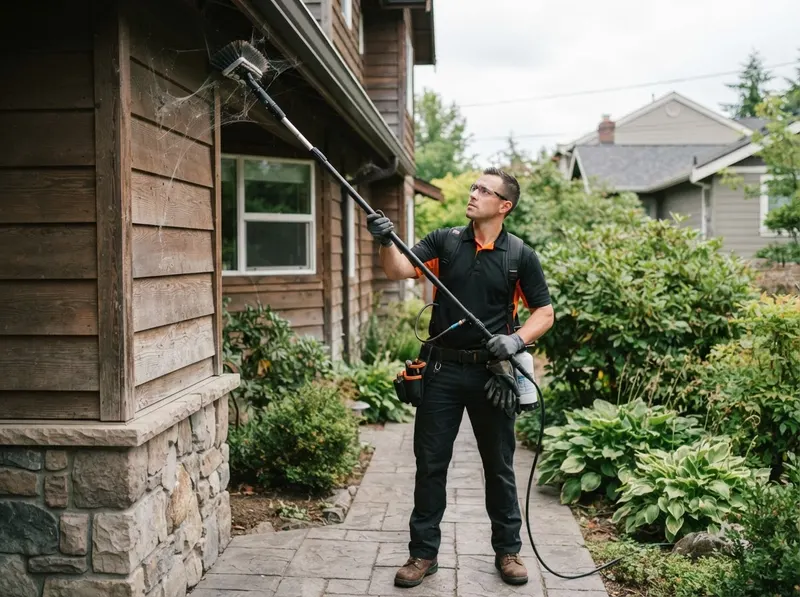
Exterior structural de-webbing and micro-encapsulated foundation barriers formulated to reduce aggressive house spider, hobo spider, and false black widow populations. Field teams sweep eaves, window frames, crawl space vents, and utility meters using telescoping brushes treated with microcrystalline dust. Foundation perimeters receive a low-profile residual barrier that targets spider travel lanes without staining painted wood, fiber cement, or historic brickwork.
Get a quote →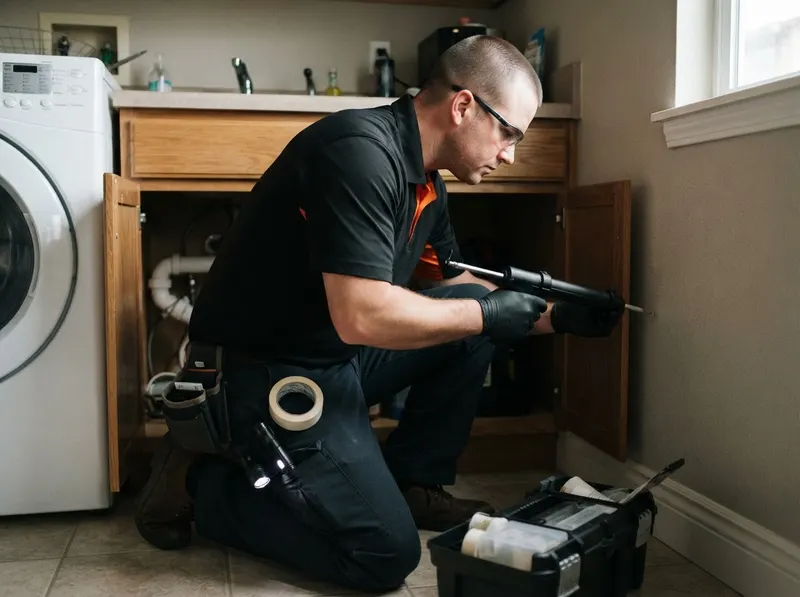
Precision gel bait matrices and insect growth regulators applied deep into kitchen cabinet hinges, appliance motor housings, and plumbing collars to eradicate German cockroaches. The treatment targets reproduction cycles by deploying synthetic hormones that prevent nymphs from maturing into reproductive adults. Technicians map insect clusters behind refrigerators, dishwashers, and wall outlets, applying non-repellent baits that spread horizontally through harborage populations.
Get a quote →You get a firm, itemized quote for your pest control service before any work begins, no surprises, no pressure.
Careful prep, tidy work, and a full cleanup when we are done. We treat your home and belongings like our own.
The same trusted, background-checked team from the first call to the final check.
Selecting structural defense protocols depends on species taxonomy, building age, and perimeter soil composition. If odorous house ants or pavement ants are trailing along foundation stems, choose a targeted non-repellent exterior perimeter barrier; if carpenter ants have excavated structural framing near roof valleys or damp subfloors, choose localized void injection paired with targeted damp-wood moisture mitigation. The trade-off centers on treatment depth versus invasive access: topical exterior treatments preserve interior living spaces without disruption, whereas void treatments require drilling discreet access ports into drywall or sill plates to reach the nesting chamber.
If Norway rats or roof rats have entered subfloors or attics, choose comprehensive physical exclusion paired with mechanical trapping; if occasional yard pests or seasonal paper wasps nest beneath exterior eaves, choose seasonal perimeter sweeps and manual nest removal. The trade-off between structural exclusion and recurring chemical barriers involves upfront mechanical installation time versus repeated topical applications. Mechanical exclusion demands sealing foundation vents, pipe penetrations, and roof flashing with copper mesh and galvanized steel, which eliminates future pest access permanently without recurring product exposure.
For property managers handling rental turnovers, choosing an acute cleanout protocol achieves zero insect presence within 48 hours, while choosing continuous perimeter management maintains an exterior toxicological shield that repels migration from adjacent properties over an extended six-month interval.
Every project gets a firm, written price after a free on-site visit. Ranges below for orientation.
Tell us about your pest control service job and we'll send a clear, written quote, usually the same day. Or just call and talk to a real Tacoma pro.
(253) 648-3783
Tacoma's coastal humidity, marine air pushing past Titlow Beach, and the heavily wooded expanses flanking Point Defiance Park create severe microclimatic pressures for structural wood and masonry. Older Victorian foundations throughout the North End and Stadium District frequently feature unsealed stone footings, brick mortar joints, and unscreened crawl spaces that allow Norway rats to transition easily from the municipal storm systems into residential subfloors. Mature Douglas fir and Western red cedar canopies in neighborhoods like Proctor, Old Town, and the West End drop continuous organic debris directly onto roof valleys and gutter systems, retaining the precise moisture threshold required for carpenter ant satellite colonies and moisture ants to establish inside wall framing. In South Tacoma and the Lincoln District, dense rows of historic homes with shallow perimeter clearances frequently suffer from subterranean moisture seepage across unfinished basements, accelerating silverfish migration and spider harborage. The seasonal transition from dry summers to fall precipitation drives exterior rodent populations inland from Commencement Bay and the Tacoma Tideflats, causing sharp surges in attic intrusions as animals follow utility conduit penetrations through soffits and eaves.
Free estimates for Tacoma & the surrounding area.
For standards, safe disposal, and service guidance on pest control service in Tacoma, WA, useful references include U.S. EPA, ENERGY STAR, U.S. Dept. of Energy, Consumer.gov, U.S. Census Bureau, and Google Maps. General consumer and small-business resources are available from USA.gov, Better Business Bureau, FTC Consumer Advice, U.S. Small Business Administration, and Ready.gov.
 Clearstone Pest Guard